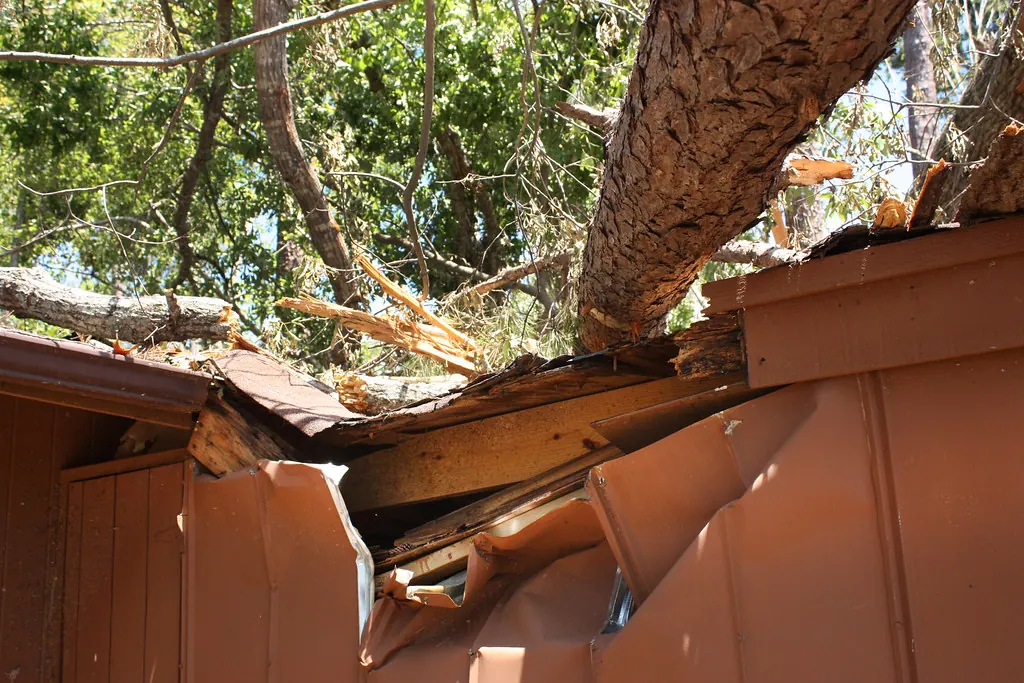
Bigger trees, bigger damage
Douglas firs routinely grow over 100 feet tall around Portland, Lake Oswego, Eugene and Corvallis. When one falls, the impact can crack rafters, break ceiling joists, bend wall framing and push water into the home for days. In winter, saturated soil lets whole trees uproot in wind that wouldn’t topple them in summer.
What a complete tree claim includes
- Structural repair to rafters, trusses, joists and wall framing, often with an engineer’s input
- Roof and siding replacement in the impact zone and wherever matching is needed
- Interior damage from the impact and from rain that came in before tarping
- Emergency services such as crane removal, tarping and board-up
- Tree removal up to the amount the policy allows
- Other structures such as fences, sheds and detached garages
Crane costs and removal limits
Removing a large fir from a house often requires a crane and a specialized crew, which can cost much more than an ordinary tree service. Many policies have specific removal limits per tree and per occurrence, but emergency services to protect the property may be treated differently. We separate those costs so each is valued under the right part of the policy.
Documenting before removal
Once a tree is removed, much of the evidence goes with it. Photograph the tree in place from several angles, the impact points, the root ball and any visible rot before anything is cut.
Questions about fallen tree damage appraisal
Is a tree that fell in my yard but missed the house covered?
Usually not, unless it blocked a driveway or ramp, or the policy has broader tree coverage. Coverage is generally tied to damage to covered property.
The insurer only paid to patch the roof. Is that normal?
It is a common starting point, but large tree impacts often damage framing and interiors too. Appraisal can resolve the gap when the claim is accepted.
Do I need an engineer?
For heavy impacts to framing, an engineer’s report helps support the repair scope. We will tell you whether yours needs one.